


Files
Submission Date
Fall 2025
Abstract
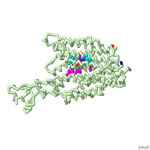
In this study we prepared a 3D printed model to better understand OCT3-mediated buprenorphine transport. Buprenorphine is a high affinity partial agonist at the mu-opioid receptor (μ-OR) and main component of Suboxone. It has a unique pharmacological profile that makes it effective for treating both pain and opioid use disorder (OUD) but has been linked to oral health issues such as dry mouth and tooth decay. The exceptionally tight binding of suboxone to μ-OR allows for sustained receptor occupancy and reduced opioid misuse potential by patients. Activation of μ-ORs can inhibit the release of acetylcholine. This neurotransmitter found in many cell types is essential for stimulating salivary secretion through muscarinic M3 receptors. When acetylcholine release is suppressed, calcium-dependent signaling in salivary gland cells decreases, leading to reduced water and ion secretion and, ultimately, dry mouth. Clinical studies have shown that buprenorphine and its metabolite, norbuprenorphine, reach concentrations up to 100 times higher in saliva than in plasma, suggesting the involvement of a cell specific active transport mechanism. Recent evidence suggests that the Organic Cation Transporter 3 (OCT3), a membrane transporter expressed in salivary gland epithelial cells, facilitates drug excretion into salivary glands. We investigated this interaction and its role in mediating buprenorphine movement into saliva. Using molecular docking and structural modeling of human OCT3 crystal structures (PDBIDs: 7ZH0, 7ZH6, 7ZHA), buprenorphine binding interactions within the central cavity of the transporter were analyzed. OCT3 has been found to transport many substrates that share structural similarities with buprenorphine, including metformin, morphine, corticosterone, and decynium-22. Docking studies revealed that buprenorphine exhibits a high binding affinity and specificity to OCT3. Although buprenorphine’s calculated affinity (−8.375 kcal/mol) is slightly lower than corticosterone (−10.640 kcal/mol) and decynium-22 (−9.749 kcal/mol), its unique interactions with PHE36, PHE250, ILE254, GLU451, and TYR454 support the hypothesis that this molecule has specific strong interactions with OCT3. These buprenorphine-specific residues are hypothesized to form strong hydrophobic interactions with the molecule, stabilizing polar interactions found with other substrates of the transporter. In contrast, metformin binds mainly to polar residues, while corticosterone, decynium-22, and morphine involve multiple shared aromatic residues, indicating broader but less selective binding. By understanding the mechanism of selective transport and salivary accumulation of buprenorphine, potential strategies to reduce its oral side effects while improving treatment outcomes for individuals with OUD can be identified.
Recommended Citation
Pesala, Veda; Vemparala, Laasya; Singh, Mehtab; Gunpath, Sydni; Schmitt Lavin, Emily; and Sikora, Arthur, "Modeling OCT3-Mediated Buprenorphine Transport as a Mechanism for Salivary Accumulation and Oral Toxicity" (2025). Protein Modeling Reports. 26.
https://nsuworks.nova.edu/protein_modeling_reports/26
Protein Modeling Presentation
G5_25_Poster.pdf (844 kB)
Protein Modeling Poster
G5_25_Jmol script.pdf (132 kB)
Protein Modeling Jmol Script