

The Evolutionary Conquest of the Fish Skull: Modular Solutions for Complex Problems
Location
Mailman Auditorium
Start Date
3-2-2027 12:00 PM
End Date
3-2-2027 1:00 PM
Description
Evolutionary innovations are scattered throughout the tree of life, and have allowed the organisms that possess them to occupy novel adaptive zones. While the impacts of these innovations are well-documented, much less is known about how these innovations arise in the first place. Patterns of covariation among traits across macroevolutionary timescales can offer insights into the generation of innovation. However, to-date, there is no consensus on the role that trait covariation (i.e. integration and modularity) plays in this process. Here, we examine the fish skull to determine the role trait integration has played in shaping the striking evolutionary innovations that allowed for the rapid proliferation and morphological diversification of fishes.
About the presenter
Across the tree of life, organisms have diversified into a breathtaking diversity of forms and have colonized almost every corner of the planet. Throughout this radiation of life, organisms have evolved traits that allowed them to adapt and function in their respective environments. What governs these trajectories of trait evolution, adaptation and diversification? As an integrative evolutionary biologist, I work to answer this question in fishes which constitute the largest and most morphologically diverse clade of vertebrates on Earth. Within this system, my lab investigates how patterns of modularity and integration govern macroevolutionary outcomes across deep time. My research program addresses these foundational questions in evolutionary biology by integrating an international field research program with developmental biology, biomechanical function, phylogenetic comparative methods and a robust statistical toolkit and has reshaped prevailing assumptions about the role of trait integration and modularity in morphological diversification, advanced new methodological tools for quantifying complex morphology, and provided empirical tests of long-standing theoretical predictions about the evolution of complexity.
The Evolutionary Conquest of the Fish Skull: Modular Solutions for Complex Problems
Mailman Auditorium
Evolutionary innovations are scattered throughout the tree of life, and have allowed the organisms that possess them to occupy novel adaptive zones. While the impacts of these innovations are well-documented, much less is known about how these innovations arise in the first place. Patterns of covariation among traits across macroevolutionary timescales can offer insights into the generation of innovation. However, to-date, there is no consensus on the role that trait covariation (i.e. integration and modularity) plays in this process. Here, we examine the fish skull to determine the role trait integration has played in shaping the striking evolutionary innovations that allowed for the rapid proliferation and morphological diversification of fishes.
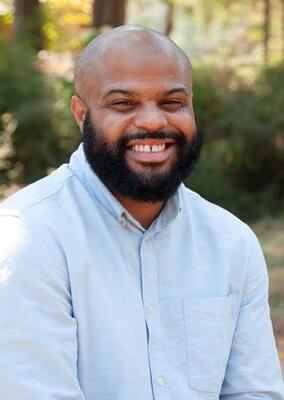
About the presenter
Across the tree of life, organisms have diversified into a breathtaking diversity of forms and have colonized almost every corner of the planet. Throughout this radiation of life, organisms have evolved traits that allowed them to adapt and function in their respective environments. What governs these trajectories of trait evolution, adaptation and diversification? As an integrative evolutionary biologist, I work to answer this question in fishes which constitute the largest and most morphologically diverse clade of vertebrates on Earth. Within this system, my lab investigates how patterns of modularity and integration govern macroevolutionary outcomes across deep time. My research program addresses these foundational questions in evolutionary biology by integrating an international field research program with developmental biology, biomechanical function, phylogenetic comparative methods and a robust statistical toolkit and has reshaped prevailing assumptions about the role of trait integration and modularity in morphological diversification, advanced new methodological tools for quantifying complex morphology, and provided empirical tests of long-standing theoretical predictions about the evolution of complexity.