


Description
The entire NSU community, including students at all levels of mathematics, is invited and encouraged to attend. A reception with coffee and snacks will take place in the Department of Mathematics Suite Parker 320 from 12:00-12:30 just prior to the colloquium talk. Abstract: Lung cancer screening by low-dose computed tomography (LDCT) has demonstrated a mortality reduction in two large randomized controlled trials. However, LDCT also frequently identifies benign pulmonary nodules in high-risk but otherwise healthy individuals. The management of small pulmonary nodules is guided primarily by malignancy probability. However, the surgical cure threshold, the maximum tumor size at which surgical resection alone offers a cure for an otherwise lethal non-small cell lung cancer (NSCLC) ultimately determines the mortality benefit associated with LDCT screening. The National Lung Screening Trial and Dutch-Belgian Randomized Lung Cancer Screening Trial demonstrated mortality reductions of 20% and 24%, respectively. Despite high adherence to screening, most aggressive NSCLCs were diagnosed too late for curative surgical intervention. Historical estimates of the median size at metastatic transition, derived from chest X-ray and registry data may overestimate the surgical cure threshold over two-fold. This upward bias stems from flawed model assumptions and specifications, compounded by the absence of data from the earliest stages of lung cancer progression. Contemporary evidence supports a small median surgical cure threshold (< 20 mm) in males and females. A small median surgical cure threshold (< 20 mm) among aggressive NSCLCs implies that the mortality benefit associated with LDCT screening is highly sensitive to the diagnostic work-up of small pulmonary nodules.
Date of Event
Thursday, October 15, 2026 from 12:30-1:20 pm
Location
Parker 203
How Wide is the Screening Window for Aggressive Non-Small Cell Lung Cancers? The Cure Threshold Metric and its Implications for Lung Cancer Screening Guidelines
Parker 203
The entire NSU community, including students at all levels of mathematics, is invited and encouraged to attend. A reception with coffee and snacks will take place in the Department of Mathematics Suite Parker 320 from 12:00-12:30 just prior to the colloquium talk. Abstract: Lung cancer screening by low-dose computed tomography (LDCT) has demonstrated a mortality reduction in two large randomized controlled trials. However, LDCT also frequently identifies benign pulmonary nodules in high-risk but otherwise healthy individuals. The management of small pulmonary nodules is guided primarily by malignancy probability. However, the surgical cure threshold, the maximum tumor size at which surgical resection alone offers a cure for an otherwise lethal non-small cell lung cancer (NSCLC) ultimately determines the mortality benefit associated with LDCT screening. The National Lung Screening Trial and Dutch-Belgian Randomized Lung Cancer Screening Trial demonstrated mortality reductions of 20% and 24%, respectively. Despite high adherence to screening, most aggressive NSCLCs were diagnosed too late for curative surgical intervention. Historical estimates of the median size at metastatic transition, derived from chest X-ray and registry data may overestimate the surgical cure threshold over two-fold. This upward bias stems from flawed model assumptions and specifications, compounded by the absence of data from the earliest stages of lung cancer progression. Contemporary evidence supports a small median surgical cure threshold (< 20 mm) in males and females. A small median surgical cure threshold (< 20 mm) among aggressive NSCLCs implies that the mortality benefit associated with LDCT screening is highly sensitive to the diagnostic work-up of small pulmonary nodules.
Presenter Bio
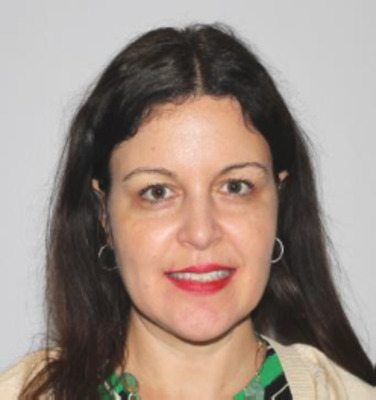
Deborah Lynn Goldwasser, PhD is an Associate Teaching Professor in the Department of Mathematics and Statistics at Florida International University. Her research focuses on developing novel statistical methodology for modeling and interpreting cancer screening data. She also develops laboratory-based statistics and calculus curricula and founded a STEM outreach program utilizing Galton boards to introduce early mathematical concepts.